



When employees use AI tools with corporate data, sensitive information leaks into AI backends, logs, and vendor chains in ways that enterprise security policies alone cannot prevent — and Dymium argues the only real fix is securing data before it reaches AI at all.
Recently (July 2025) an accidental API key exposure at a U.S. federal agency allowed access to 52 private AI models developed by xAI, including “Grok-4.” A GitHub upload revealed the key, and despite the code being taken down, the credential remained active, exposing sensitive AI infrastructure. Security experts emphasized that the breach stemmed from poor API credential hygiene (not a competing data access tool), underscoring how easily APIs can become attack vectors.API-driven data sharing is central to modern digital innovation, from banks powering fintech apps with customer data to retailers enabling dynamic inventory updates. But with every new API comes risk: every endpoint is a potential security hole.
A Dual-Edged Sword
APIs provide developers and partners with fast and streamlined access to data. They accelerate integrations, enable developer ecosystems, and power real-time workflows. But without proper governance:
- Sensitive information can leak via misconfigured endpoints or overly broad access.
- Unauthorized actors may extract more data than intended.
- APIs can bypass existing compliance controls or audit paths.
The risk is especially acute in financial institutions that handle customer PII or KYC data, as well as in mid-sized retail and service companies that share inventory or customer behavior information with third parties.While APIs empower rapid innovation and integrations, they also demand governance and care. To avoid turning those opportunities into vulnerabilities, teams must adopt disciplined API security practices that prevent misuse, exposure, or abuse.
Best Practices for Secure API Data Sharing
True API security blends encryption, access control, and active monitoring, giving you confidence that data is shared safely, without slowing teams down. Key practices include:
- Encrypted data transit (mTLS): End-to-end encryption with strong identity verification.
- Field- and row-level access: Serve only what’s permitted; mask or exclude sensitive fields.
- Rate limiting & abuse detection: Throttle traffic and detect anomalies to stop scraping or brute-force attacks.
- Credential hygiene & rotation: Enforce token management, rotate keys, and scan for accidental exposure.
A Smarter Path: Governed Data Access Layer
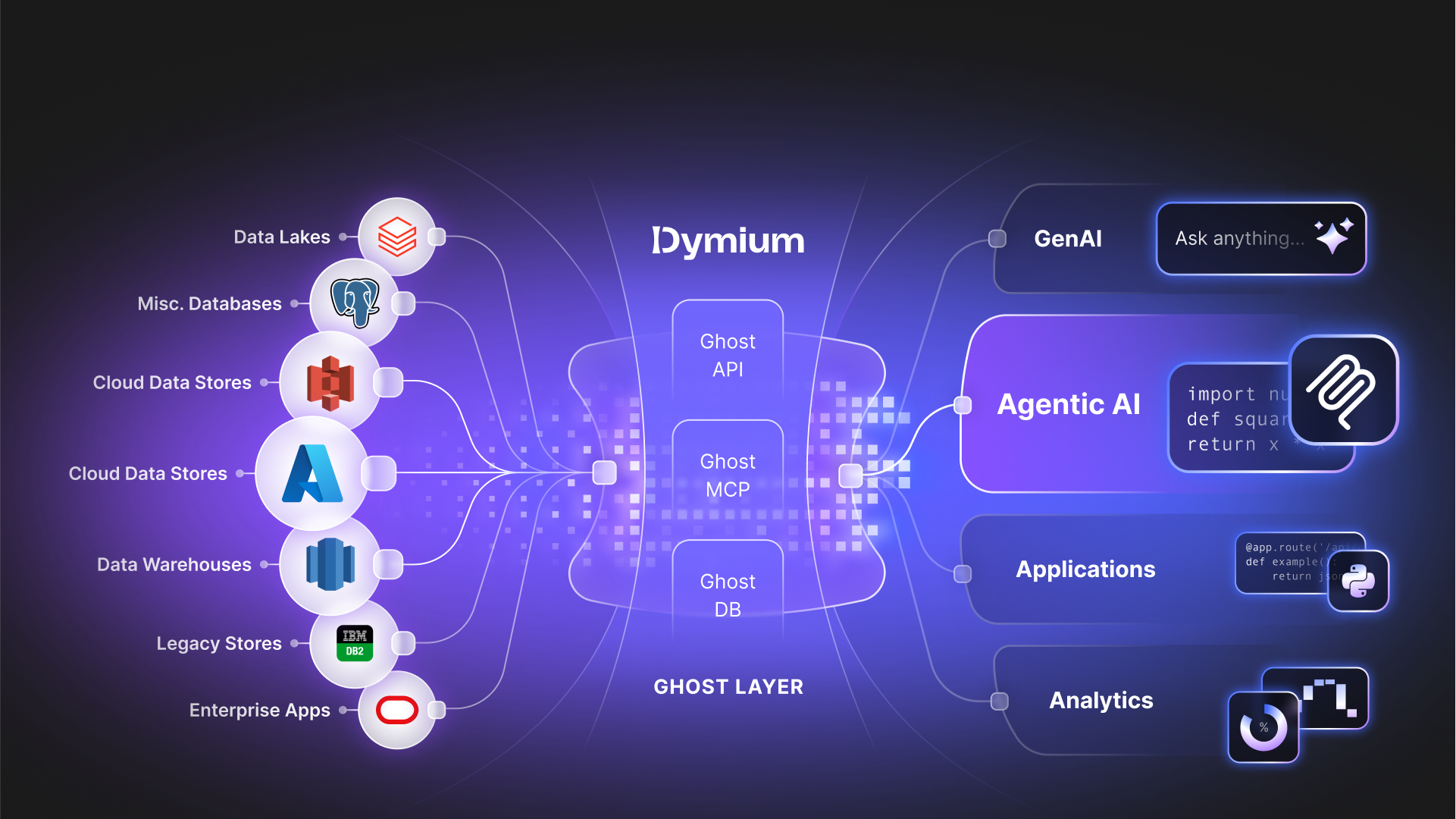
Rather than building APIs ad hoc for each database—creating governance blind spots when every endpoint has its own rules and configurations—organizations can gain greater control by adopting a unified, policy-driven data access layer. A practical example of this approach is what we call ghost APIs.Instead of exposing raw database endpoints or custom-coded access logic, ghost APIs act as governed gateways. Each request is filtered at query time: sensitive fields can be masked, rows excluded, and every access attempt logged automatically. Developers still consume familiar REST endpoints, but what’s returned is always the compliant subset of data policies allowed.This architecture centralizes policy control, ensuring consistency across the fleet of APIs. Permissions, masking, and audit rules are defined once and uniformly enforced. Every request is logged, simplifying compliance reporting and incident investigations.The result: developers retain agility, integrations stay fast, and security teams maintain real-time control. Instead of chasing exposures after the fact, ghost APIs govern access up front—so innovation and security advance together.
.png)
.png)

.png)
.png)